
Amex Travel
American ExpressTravel & Local
4.9129.00 Reviews
- Version
- 1.14.0
- Installs
- 100.00K
- Age Rating
- Everyone
Screenshots


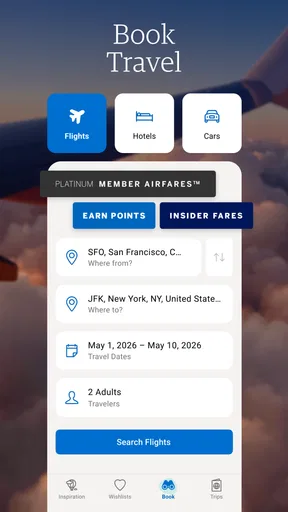

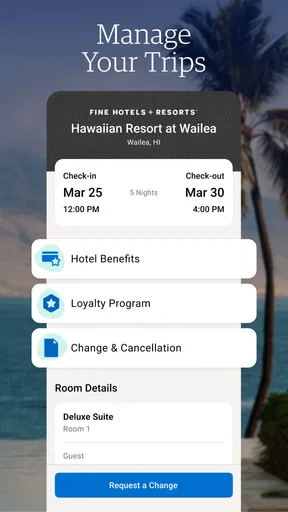
Our Review of Amex Travel
 Analysis by Appyee
Planning a trip is usually less about finding one attractive destination and more about keeping a dozen small decisions connected. I tried Amex Travel with that problem in mind: starting with a rough travel idea, moving through the booking process, checking what happens when the app hands me off to another step, and then judging whether the final result feels easier than using separate travel tools. My overall impression is that it is most useful for people already comfortable with American Express and looking for a focused travel companion rather than a universal booking marketplace.
Developed by American Express, this free Travel & Local app presents a more specific proposition than a general flight or hotel search tool. Its store summary calls it “Your Travel Companion,” while the short description keeps things simple with “Amex Travel.” That wording matters because the experience feels centered on organizing travel through the American Express ecosystem, not on replacing every travel service you already use.
The app is rated for Everyone, and the current release is version 1.14.0. It has a 4.9 average from around 2.3 thousand ratings, with over 100 thousand installs. Those figures suggest a small but very positive audience, although I would not treat the rating alone as proof that it suits every type of traveler. The important question is whether its workflow matches the way you plan and manage trips.
From a rough trip idea to a usable travel plan
I find it useful to begin with the actual trip problem rather than browse destinations without a purpose. This section looks at how Amex Travel can help turn a loose idea into a workable set of choices, while keeping in mind that a focused American Express route is different from searching the entire travel market.
Starting with the traveler, not the destination page
The most realistic starting point is not a perfectly organized itinerary. It is usually something like, “I need to get away next month,” “I have a work trip coming up,” or “I want to see whether my available travel budget can cover a hotel.” That is where I found the app’s focused approach helpful. Instead of opening a broad travel marketplace filled with unrelated offers, I could approach the trip as an American Express travel task.
This distinction is easy to overlook. A general search engine is excellent when I want to compare every possible supplier, read a huge range of independent reviews, or build a complicated trip across many services. Amex Travel makes more sense when I have already decided to use the American Express channel and want the next steps gathered in one place. It reduces the number of tabs and apps involved, but it also narrows the universe of choices to the experience available through that channel.
My first practical tip is to decide what kind of traveler you are before relying on the app. If you care most about a simple, card-connected planning route, it deserves a look. If your priority is finding the absolute lowest fare from every possible provider, I would begin with a broad comparison service and use this app later as a second check.
The first search is only the beginning
Travel searches often look straightforward until the details start changing. A different departure day, a longer connection, a particular hotel area, or a preference for flexible arrangements can change the usefulness of an option completely. I found it better to treat the first results as a shortlist rather than an answer.
That habit is especially important with a travel app tied to a particular booking environment. The app can help me move from an idea toward a decision, but it cannot remove the trade-offs built into travel itself. A convenient result may not be the cheapest. A lower price may involve a less convenient schedule. A familiar hotel may be worth more to me than a small saving elsewhere.
I also recommend checking the complete trip before committing to one attractive component. A hotel that looks ideal in isolation may be awkward if the transport plan changes, while a flight that seems inexpensive may create a much longer day. The useful outcome is not a single good-looking result; it is a combination that still makes sense when I consider time, location, and the rest of the journey.
Moving from selection to booking
The strongest part of this type of workflow is continuity. Once I have chosen a travel direction, I do not want to restart the process in a different place just to finish it. Amex Travel is designed around keeping that journey within the American Express experience, which is its clearest advantage over ordinary browsing.
That continuity also creates a responsibility for the user. I still need to read the details carefully before confirming anything. Travel purchases are not the place to skim. I would check the dates, traveler names, destination, room or journey details, cancellation terms, and the final amount shown at the point of purchase. The app can organize the process, but it cannot know which compromise I am willing to make.
A useful workflow is to take a brief pause before the final step. I compare the selected option with the original need: Is the arrival time reasonable? Is the location practical? Does the booking suit the whole group? This pause prevents the common mistake of choosing the first acceptable result simply because the search process feels tiring.
What happens when the app hands the trip over
A travel booking is rarely a single uninterrupted action. The app may be the place where I search and begin the process, but the trip itself continues through confirmations, account details, payment, travel documents, and communication with the relevant provider. That handoff is where many travel tools become less comfortable.
My advice is to treat the confirmation stage as a separate task, not as an automatic ending. After completing a booking, I would save the confirmation information somewhere I can reach without depending on memory. I would also check that the names and dates match the identification or documents I expect to use. This is a small step, but it is one of the most valuable habits when moving between an app and the real-world travel provider.
The American Express connection can make the process feel more coherent for existing customers, but it does not mean every later question is answered inside one screen. If I need a change, clarification, or help with a provider-specific issue, I should be prepared for the support path to depend on the booking and the company involved. That is normal for travel, but it is still friction worth recognizing before choosing the app as my only planning tool.
A realistic everyday scenario
Imagine I am arranging a short city break for two people. I begin with a destination and approximate dates, review the available travel choices, and then look for accommodation that keeps the whole plan manageable. Rather than booking the first appealing room, I compare its location with the arrival and departure arrangements. I then review the final details, complete the booking through the American Express route, and keep the confirmation ready for the next stage.
In that situation, the app’s value is not that it magically plans the holiday for me. Its value is that it gives the trip a central starting point and helps reduce the mental jump between “I should travel” and “I have made a travel arrangement.” For a short, reasonably clear trip, that can be enough to make the process feel calmer.
Now change the scenario to a complicated journey involving several independent bookings, unusual transport, multiple currencies, and constant schedule changes. The same focused design may become a limitation. I would probably use a wider travel search tool, a dedicated itinerary organizer, and the official provider apps alongside Amex Travel rather than expecting one service to manage everything.
Why the American Express connection matters
The developer is American Express, so the app’s identity is not incidental. It is built for travelers who see value in handling travel through that company’s environment. For those users, the familiar context may be more important than having the largest possible selection of unrelated travel offers.
For someone who does not use American Express, the decision is less obvious. A free app can still be worth exploring, but the benefit depends on whether its travel route, account relationship, and booking experience fit that person’s habits. I would not install it simply because its rating is high. I would install it when I have a clear reason to use American Express for the trip.
This is also where the app differs from a standard travel aggregator. Aggregators are built around breadth and comparison. Amex Travel is better understood as a branded travel route with a particular customer relationship behind it. That can feel more direct for the right user and less flexible for someone who wants to mix every possible provider in one search.
Three details that improve the workflow
Separate discovery from confirmation. Use the early results to understand the available choices, then return to the complete trip details before making a decision. This avoids treating a promising first result as the finished plan.
Plan for the handoff. Keep confirmation details accessible and check them after booking. The real trip continues outside the search screen, so a clean record is more useful than relying on a notification you may not find later.
Use a comparison tool when breadth is the priority. If your main goal is to scan every supplier or construct a highly unusual itinerary, compare elsewhere first. Amex Travel is more convincing as a focused booking companion than as the only travel resource.
Where the flow feels smooth
The app is at its best when the traveler already has a clear purpose and wants fewer disconnected steps. A person arranging a straightforward trip can move from an initial idea to a more concrete plan without beginning from a blank page every time. The American Express context gives the experience a defined center, and that is more useful than a generic interface when I already know which travel relationship I want to use.
I also like the psychological benefit of a focused workflow. Travel research can become exhausting because every search creates another choice. A narrower environment can help me stop browsing and start deciding. That is not the same as proving that the selected option is the best deal, but it can make the process more manageable and less scattered.
The free price removes an obvious barrier to trying it, and the Everyone age rating makes it broadly approachable from a store perspective. Still, “free” describes access to the app, not the cost of travel arranged through it. I would keep that distinction in mind and judge the service by the usefulness of its booking path, not by the absence of an app charge.
Where the flow breaks down
The main weakness is the same feature that gives the app its identity: specialization. If I want a neutral overview of the entire travel market, a general comparison service may be better. If I need a detailed day-by-day itinerary, a dedicated itinerary app may be more suitable. If I am already loyal to another airline, hotel group, or booking provider, its own app may offer a more direct way to manage the reservation after purchase.
Another point of friction is that travel decisions do not end when the booking screen closes. Changes, cancellations, delays, provider questions, and document checks can all require attention elsewhere. I would not choose Amex Travel expecting it to remove every support handoff. Instead, I would choose it if its initial organization and American Express connection are worth those later transitions.
There is also a trade-off between convenience and independent verification. A single route is easier to follow, but I may see fewer alternatives than I would through several competing services. For expensive or time-sensitive travel, I would compare the important details before paying, even if that means briefly leaving the app. Convenience is valuable, but it should not replace a sensible check.
Who should use it, and who should skip it
I would recommend Amex Travel to an American Express customer who wants a clear travel starting point, prefers a connected booking experience, and is arranging trips that do not require an unusually complex collection of providers. It is also a reasonable option for someone who feels overwhelmed by broad travel marketplaces and would rather work through a more focused environment.
I would be more cautious if I were a bargain hunter who compares every supplier, a traveler with complicated multi-stop arrangements, or someone who wants one app to manage every post-booking detail. Those users may get better results by combining a broad search service with official provider apps and a separate itinerary tool.
The high average rating and growing install base make the app worth considering, but they do not change that basic fit test. A positive store reputation tells me that many users enjoy the experience; it does not tell me whether its particular American Express-centered workflow matches my trip.
My final assessment after following the complete journey
Amex Travel succeeds when I judge it as a focused travel companion rather than a replacement for the whole travel internet. It helps turn an initial travel idea into a structured booking path, and its connection to American Express is the reason to choose it over a generic alternative. The experience is most convincing when the trip is reasonably simple and the traveler already wants to work within that ecosystem.
It is less persuasive when I need maximum market coverage, highly specialized planning, or extensive control after the booking is made. In those cases, I would use it alongside other tools instead of making it the center of everything. That is not a failure; it is a useful boundary to understand before starting.
My recommendation is therefore practical: try it if you want an American Express-based way to organize travel, but keep your normal comparison and document-checking habits. The best result comes from using the app as the beginning of a careful travel workflow, not as a substitute for careful travel decisions. With that expectation, this free Travel & Local app can be a convenient addition for the right traveler, while people seeking a completely open-ended marketplace should look elsewhere first.
Verdict
Strengths of Amex Travel
- Searches flights, hotels, and car rentals in one place.
- Useful filters make it easier to compare travel options.
- Trip details and reservations are conveniently organized.
- Amex card benefits can add value to eligible bookings.
- Helpful for tracking itineraries while traveling.
Limitations of Amex Travel
- Many features are most useful to American Express cardmembers.
- Prices and availability may differ from other travel platforms.
- Some bookings may have limited cancellation or change options.
- The app may require account access for its full functionality.
- Travel support and rewards terms can vary by card and region.
Other Releases by American Express
View All
Amex
Finance4.8
Similar Picks in This Category
View All
Google Maps
Google LLC3.4

Google Maps Go
Google LLC4.1

Booking.com: Hotels & Travel
Booking.com Hotels & Vacation Rentals4.8

Google Earth
Google LLC3.8

Skyscanner Flights Hotels Cars
Skyscanner Ltd4.8

trivago: Compare hotel prices
trivago N.V.4.4
Frequently Asked Questions
What is Amex Travel, and who can use it?
Amex Travel is a booking service from American Express for finding and reserving flights, hotels, cruises, car rentals, and vacation packages. Access and benefits depend on your American Express card, account type, country, and eligibility. Some features may be available only after signing in, so users should confirm that their card and region are supported before downloading or using the service.
Can I use Amex Travel without an American Express card?
Amex Travel is primarily designed for American Express card members, and many of its most valuable features require an eligible card and an American Express online account. In some regions, travelers may be able to browse or make limited bookings without a card, but special benefits, points redemption, statement credits, and cardmember rates generally require signing in with an eligible account.
Can I pay for bookings with Membership Rewards points?
Eligible American Express card members may be able to use Membership Rewards points toward certain flights, hotels, vacation packages, or other travel purchases through Amex Travel. The redemption value, available options, and payment rules can vary by card and market. Before confirming a reservation, review the points price, cash balance, taxes, fees, and cancellation conditions carefully.
What travel benefits can Amex Travel provide?
Benefits vary according to the American Express card used and the selected property or booking. Depending on eligibility, users may receive statement credits, bonus points, room upgrades, daily breakfast, property credits, late checkout, or access to programs such as Fine Hotels + Resorts or The Hotel Collection. Benefits are not guaranteed for every booking, so always read the displayed terms.
Can I cancel or change a reservation made through Amex Travel?
Changes and cancellations are possible only when allowed by the specific airline, hotel, cruise line, car rental company, or package provider. Policies can differ substantially, and some reservations are nonrefundable or carry service fees. Open the trip details in the app or contact American Express as soon as possible, then check the deadline and any penalties before requesting a change.
